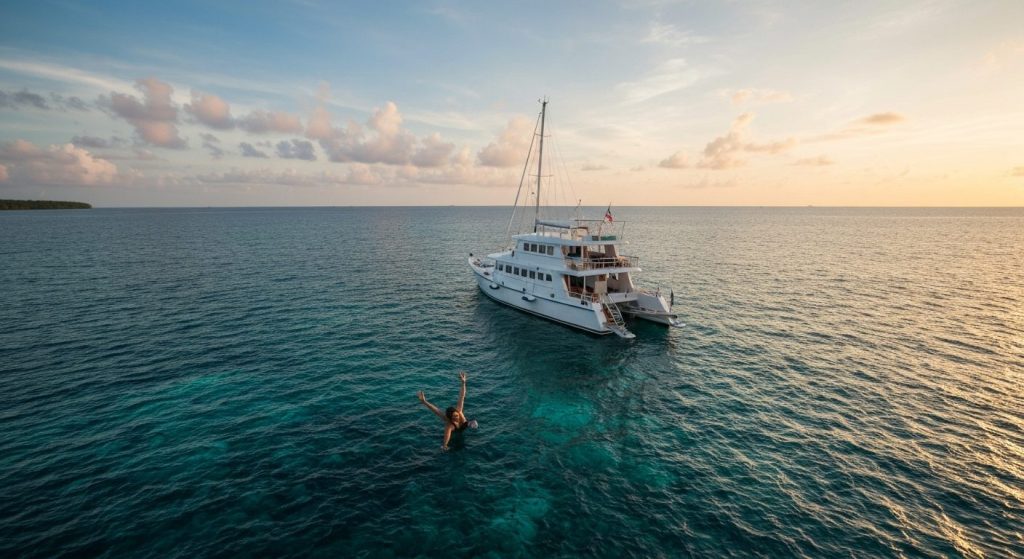
When you search for a `cape kri raja ampat guided dive near me`, you are looking for an experience at one of the world’s most vibrant marine locations. Our Sorong and Waisai-based operation offers direct access to these signature sites – Cape Kri, Manta Sandy, and Blue Magic – ensuring you experience Raja Ampat’s underwater life with local expertise and small group guidance.
Raja Ampat’s Dampier Strait, positioned between Waigeo and Batanta islands, is a region globally recognised for its marine biodiversity. It is where deep, nutrient-rich currents converge, creating an environment that supports an extraordinary array of coral and fish species. For those seeking `raja ampat luxury diving near me`, this area is a primary destination, offering diverse dive profiles from strong current drifts to calm cleaning stations. The sites here are not merely beautiful; they are active marine ecosystems, constantly in motion.
### The Dampier Strait: A Crossroads of Marine Life
The Dampier Strait acts as a funnel for ocean currents, drawing in plankton and nutrients from deeper waters. This rich food source underpins the entire food chain, from tiny pygmy seahorses to schooling pelagic fish and reef sharks. Water temperatures generally range from 27-30°C (81-86°F) year-round, offering comfortable conditions for diving. Visibility often extends beyond 20 meters (65 feet), though it can vary with currents and plankton blooms, which are, in fact, what attract the larger filter feeders.
Understanding the currents in the Dampier Strait is fundamental to planning any dive. These currents can be strong, often dictating the dive profile and the behaviour of marine life. Our local divemasters, many of whom have explored these waters for decades, possess an intimate knowledge of tidal patterns and how they influence each site. This expertise is crucial for safe and rewarding experiences, particularly at sites like Cape Kri and Blue Magic, which are renowned for their `dampier strait drift dive current` conditions.
## Cape Kri: The World Record Reef
Cape Kri, a narrow reef stretching from the eastern tip of Mansuar Island, is not just a dive site; it is a living marine monument. In 2007, during a scientific survey by Dr. Gerry Allen, a world record was set here: 374 species of reef fish were counted on a single dive. This `cape kri world record reef fish count` underscores the site’s exceptional biodiversity and its global importance for marine conservation.
### Diving the Cape Kri Wall Diving Experience
A `cape kri diving expedition` typically involves a drift dive along the reef wall. The current, often moderate to strong, carries divers along, revealing an ever-changing panorama of marine life. The reef crest, in shallower waters, is a vibrant garden of hard and soft corals, anemones, and sponges. As you descend along the wall, the sheer density of fish becomes apparent. Schools of fusiliers, snappers, and bannerfish form shimmering curtains, parting to reveal larger predators.
Common sightings at Cape Kri include white-tip and black-tip reef sharks patrolling the deeper sections, giant trevally and barracuda hunting in the blue, and an abundance of reef fish such as parrotfish, angelfish, and butterflyfish. Keep an eye out for wobbegong sharks resting under coral overhangs, and occasionally, a passing manta ray or even an oceanic sunfish (mola mola) in the deeper, cooler water. The `cape kri wall diving experience` is truly an immersion into a thriving ecosystem.
### Conditions and Best Practices for Cape Kri
Given the potential for strong `dampier strait drift dive current` at Cape Kri, this site is generally recommended for experienced divers holding at least an Advanced Open Water certification. Our `raja ampat guided dive divemaster` will provide a thorough briefing, explaining the anticipated current direction and speed, entry and exit points, and safety procedures. Surface marker buoys (SMBs) are mandatory for all drift dives and are carried by our guides.
Dives at Cape Kri often range from 10 to 30 meters (33 to 98 feet), depending on the current and desired bottom time. The top of the reef, around 5-10 meters (16-33 feet), offers an ideal safety stop with plenty of marine life to observe. Visibility is generally excellent, but strong currents can sometimes stir up sediment.
- Site Name: Cape Kri
- Location: Eastern tip of Mansuar Island, Dampier Strait
- Type: Wall and reef slope drift dive
- Depth: 5-30+ meters (16-98+ feet)
- Current: Moderate to strong, often dictating dive plan
- Certification Recommended: Advanced Open Water or equivalent
- Key Marine Life: World record reef fish count (374 species), reef sharks, barracuda, giant trevally, fusiliers, wobbegong sharks, abundant corals.
- Best For: Experiencing peak reef biodiversity and vibrant drift diving.
## Manta Sandy: The Famed Cleaning Station
Manta Sandy is perhaps Raja Ampat’s most famous and beloved dive site, renowned for its consistent `manta sandy cleaning station diving`. Located off the coast of Mansuar Island, this shallow, sandy bottom area serves as a natural service station for oceanic manta rays (Manta birostris) and reef manta rays (Mobula alfredi). Here, smaller fish, known as cleaner wrasse, remove parasites and dead skin from the mantas, a symbiotic relationship that provides an incredible spectacle for divers and snorkelers.
### Manta Sandy Raja Ampat Diving and Snorkeling
For those seeking a `manta ray encounter tour package`, Manta Sandy delivers. The site is relatively shallow, typically 5-18 meters (16-59 feet), making it accessible for a wide range of certifications. Divers position themselves carefully around designated viewing areas, often marked by rocks or coral bommies, and wait for the mantas to glide in. Patience is key, but the reward is often multiple mantas circling above, seemingly oblivious to human presence as they engage with the cleaner fish.
A `manta sandy raja ampat snorkeling tour near me` is also a popular option here. Due to the shallow depth, snorkelers can often enjoy equally spectacular views of mantas feeding or being cleaned just beneath the surface. Our guides ensure snorkelers maintain a respectful distance, allowing the mantas to behave naturally.
### Observing Manta Ray Behavior
Manta rays are intelligent and curious creatures. At Manta Sandy, you might observe them performing barrel rolls as they feed on plankton, or gracefully hovering over the cleaning stations. Each manta has a unique spot pattern on its underside, like a fingerprint, which researchers use for identification. Our divemasters encourage passive observation, emphasizing no touching, chasing, or blocking the mantas’ path. This respectful approach ensures the cleaning station remains a natural and undisturbed environment for these gentle giants.
### Conditions at Manta Sandy
Currents at Manta Sandy are generally milder than at Cape Kri or Blue Magic, though they can still be present, especially around incoming or outgoing tides. The sandy bottom can be stirred up by current or by careless fin kicks, so maintaining good buoyancy is important. Visibility is usually good, ranging from 15-25 meters (49-82 feet).
While manta sightings are frequent, they are wild animals, and we cannot guarantee their presence on every dive. However, Manta Sandy offers some of the highest chances of a `manta ray encounter tour package` in the region. The best time for `manta sandy raja ampat diving` is generally during the incoming tide when nutrient-rich waters bring in plankton, attracting the mantas.
## Blue Magic: The Seamount Drift
Blue Magic is a submerged seamount, or pinnacle, rising from the depths to within 7-8 meters (23-26 feet) of the surface. Its exposed location in the Dampier Strait makes it a magnet for pelagic action and a dynamic `blue magic seamount drift dive`. For those looking for a `blue magic raja ampat dive tour near me`, this site offers a different kind of thrill compared to the reef walls or cleaning stations.
### The Blue Magic Seamount Drift Dive Experience
Diving Blue Magic is almost always a drift dive, with divers descending quickly to the top of the pinnacle and then allowing the current to carry them along its slopes. The site is famed for large schools of barracuda, trevally, and fusiliers that swirl around the pinnacle. Oceanic manta rays are also frequent visitors here, often feeding in the open water.
What makes Blue Magic truly special are the encounters with larger pelagic species. Reef sharks, including grey reef sharks and sometimes even hammerheads, are seen patrolling the deeper edges. Occasional sightings of wahoo, tuna, and even whale sharks have been reported. The `blue magic seamount drift dive` is an experience of raw ocean power and abundant marine life. The visibility here can be truly astounding, often exceeding 30 meters (98 feet), providing clear views of the wide-angle action.
### Conditions and Certification for Blue Magic
Due to its exposed location and the potential for very strong and unpredictable currents, Blue Magic is considered an advanced dive site. Divers should possess excellent buoyancy control, experience with drift diving, and be comfortable in open water with varying conditions. An Advanced Open Water certification and recent dive experience are highly recommended. Our `raja ampat guided dive divemaster` will assess conditions carefully before any dive here and provide a detailed briefing on currents, hand signals, and safety procedures.
Dives typically range from 10 to 30 meters (33 to 98 feet). The top of the pinnacle, with its soft corals and reef fish, offers a vibrant area for a safety stop. Entry and exit procedures are carefully managed to account for the prevailing current.
## Planning Your Raja Ampat Luxury Diving Near Me Expedition
Our commitment at Luxury Raja Ampat is to provide direct, locally-run diving experiences that connect you with the best `best dive sites raja ampat dampier strait`. As a Sorong-based operator, we own and manage our own fleet of liveaboard and private charter vessels. This direct operation means our local teams, from captains to divemasters, have intimate, real-time knowledge of the conditions and marine life patterns.
When you book a `raja ampat luxury diving near me` experience with us, you are engaging with a team that has navigated these waters for years. Our `raja ampat guided dive divemaster` to guest ratio is kept small, typically 1:4 or less, ensuring personalized attention, enhanced safety, and a more intimate underwater experience.
### Our Fleet and Partner Network
For dives departing Sorong or Waisai, we primarily utilize our own fleet of custom-built liveaboards and phinisi charters. These vessels are designed for comfort, safety, and efficient access to dive sites like Cape Kri, Manta Sandy, and Blue Magic. They include modern navigation, safety equipment, and dedicated dive decks.
We understand that some travelers may prefer larger liveaboards or land-based resort dive packages. In such cases, we work with a vetted network of partner operators. These partners are chosen for their safety records, quality of service, and alignment with our commitment to responsible tourism. If you proceed with our partner, they may pay us a referral fee at no extra cost to you. This transparent approach ensures you always receive the best option for your specific travel needs, regardless of who operates the vessel.
### Raja Ampat Dive Site Permit Logistics
Accessing Raja Ampat’s dive sites requires a Marine Protected Area (MPA) entry permit, often referred to as the Raja Ampat Sea Permit or PIN. This permit costs IDR 1,000,000 for international visitors (last verified June 2026) and is valid for one year from the date of purchase. It is essential for all diving and snorkeling activities within the marine park.
Our team assists with all `raja ampat dive site permit logistics`. We will guide you through the process of obtaining your permit, often arranging for its purchase upon your arrival in Sorong or Waisai, or advising on pre-purchase options. This ensures a smooth start to your `cape kri diving expedition` without any administrative delays. The funds from these permits directly contribute to the conservation efforts of the Raja Ampat Marine Protected Area.
### Best Time to Visit and Dive
Raja Ampat is a year-round diving destination, but specific seasons can offer different experiences.
* **October to April:** Generally considered the peak season with calmer seas and drier weather. This period often brings excellent visibility and a high chance of manta ray sightings, particularly at Manta Sandy. Currents can still be strong, especially around new and full moons.
* **May to September:** The “shoulder” or “off-peak” season. While there can be more rain and choppier seas, especially in July and August, this period also sees fewer crowds. The marine life remains active, and sometimes, the plankton blooms during these months can attract large schools of fish and other pelagics. Some experienced divers prefer this time for the raw, untamed feel of the region.
Our local knowledge allows us to advise on the best timing based on your preferences and the specific sites you wish to visit. We monitor weather and sea conditions daily to ensure optimal and safe dive planning.
### Safety and Certification Requirements
Diving in Raja Ampat, especially at sites like Cape Kri and Blue Magic, can involve currents that range from mild to very strong. While Manta Sandy is generally calmer, understanding and managing currents is a fundamental part of diving here. These are advanced diving environments.
Therefore, we firmly remind you that these notes are for planning and information purposes. They are not a replacement for the comprehensive in-water briefings provided by our certified instructors and divemasters, nor are they a substitute for professional medical advice.
To participate in our `raja ampat guided dive divemaster` expeditions, guests are expected to hold appropriate diving certifications. For sites with potential strong currents, such as Cape Kri and Blue Magic, an Advanced Open Water certification (or equivalent) and recent dive experience are strongly recommended. We also advise comprehensive dive insurance. Our team will verify your certifications and logbook before any advanced dives. Your safety is our primary concern, and our `raja ampat guided dive divemaster` will always make decisions based on current conditions and diver experience levels.
## Choosing Your Guided Dive Experience: What to Expect
When you choose a `raja ampat guided dive divemaster` with us, you are selecting an experience built on local knowledge and a commitment to responsible diving. Our guides are not just skilled divers; they are storytellers of the reef, often pointing out macro life that others miss, or explaining the behavior of a particular school of fish.
Our dive briefings are detailed and specific, covering:
* **Site Overview:** Topography, expected depths, and highlights.
* **Current Assessment:** Direction, strength, and how it will impact the dive.
* **Marine Life Focus:** What to look for and how to observe respectfully.
* **Safety Procedures:** Buddy system, emergency protocols, and specific hand signals for current.
* **Environmental Guidelines:** Emphasizing no contact with marine life or coral, and maintaining good buoyancy.
We provide quality rental equipment, though we always recommend bringing your own mask, fins, and dive computer for comfort and familiarity. Our boats are equipped with oxygen, first-aid kits, and communication devices for emergencies.
Ready to explore these iconic sites with a local team? Our specialists are available to discuss your ideal `cape kri raja ampat guided dive near me` adventure.
Plan your trip now, or reach out via WhatsApp for a direct conversation about your Raja Ampat diving expedition.
### Frequently Asked Questions
### What is the best time of year to see manta rays at Manta Sandy?
Manta rays are present year-round in Raja Ampat. However, the period from October to April often provides calmer weather and good visibility, which can make manta encounters more consistent. During the incoming tide at Manta Sandy, the chances of seeing them at the cleaning station are usually highest.
### Do I need an advanced certification for all Raja Ampat dive sites?
While many sites in Raja Ampat are suitable for Open Water divers, signature sites like Cape Kri and Blue Magic often involve strong currents and are best suited for divers with an Advanced Open Water certification or equivalent, and recent experience with drift diving. Your `raja ampat guided dive divemaster` will assess your certification and experience before these dives.
### How do I get my Raja Ampat Marine Protected Area (MPA) permit?
Our team will assist you with obtaining your Raja Ampat MPA permit. This permit is mandatory for all visitors participating in marine activities. We can arrange for its purchase upon your arrival in Sorong or Waisai, or advise you on where to acquire it if you prefer to do so independently. The cost is IDR 1,000,000 for international visitors (last verified June 2026).
### What is the maximum group size for your guided dives?
We maintain small guide-to-guest ratios for all our guided dives, typically 1:4 or less. This approach ensures personalized attention, enhanced safety, and a more intimate experience with the underwater environment.
### Can snorkelers participate in the Manta Sandy experience?
Yes, Manta Sandy is an excellent site for snorkelers due to its shallow depth. Snorkelers often get incredible views of manta rays feeding or being cleaned just below the surface. Our guides ensure snorkelers maintain a respectful distance from the mantas to avoid disturbing their natural behavior.